Science

A new way to equip Africa’s science labs: get students to build their own
A new way to equip Africa’s science labs: get students to build their own

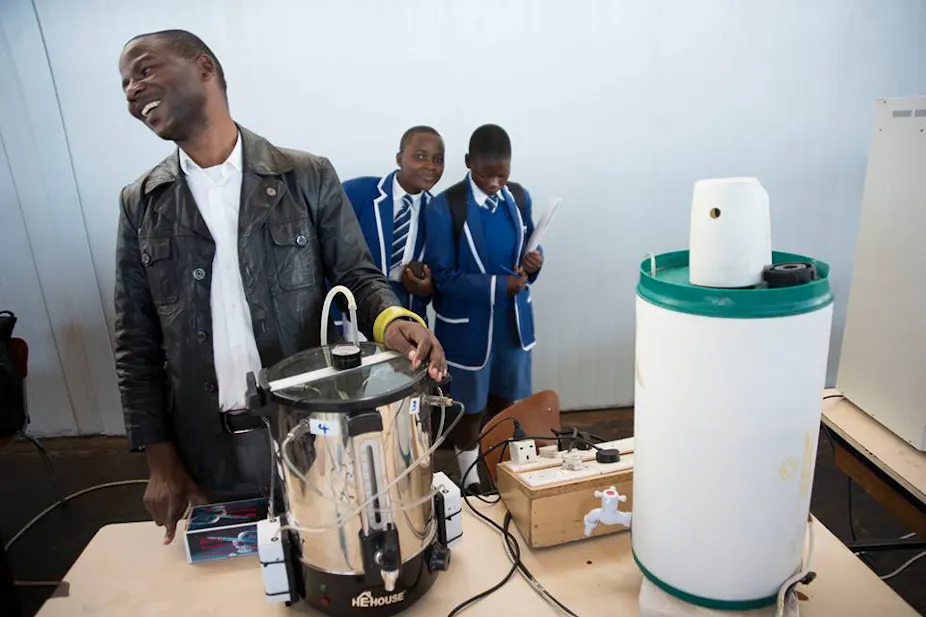
Water urns become bioreactors with this clever design. Jeffrey Barbee, Alliance

How does one train science students without equipment? As a sociologist of science specialising in African countries, this is a question I get asked with sad regularity.

How, African science, technology, engineering and maths educators ask me, can the next generation of globally competitive scientists be trained using teaching laboratories that lack even the most basic equipment?

Science in Africa: homegrown solutions and talent must come first

Science in Africa: homegrown solutions and talent must come first

There’s more and more good science news coming from Africa

It’s been a recurring refrain: Africa still lags woefully behind the rest of the world in generating new scientific knowledge.

As figures collated by the World Bank in 2014 show, the continent – home to around 16% of the world’s population – produces less than 1% of the world’s research output.

How scientists listening to the earth can unlock Africa’s many riches

How scientists listening to the earth can unlock Africa’s many riches

Africa's physical landsape is not a permanent fixture and is being constantly shaped by massive geological forces.

Africa was once at the centre of the world – literally. It was the landmass at the centre of Pangaea, a super continent that broke up into smaller plates about 200 million years ago.

Today, Africa sits on the second largest of these plates and her physical landscape is not a permanent fixture. It’s being constantly shaped by massive geological forces that reach deep down into the interior of the Earth. This is the central organising idea in the earth sciences: the theory of plate tectonics.

Why Africa needs a science synthesis to tackle complex problems

Why Africa needs a science synthesis centre to tackle complex problems

Synthesis centre image

A synthesis centre in Africa would get an African perspective on global socio-environmental challenges.


Scientific research often requires sophisticated equipment like radio telescopes or laboratories. This infrastructure is essential for scientific discovery. But another form of infrastructure is now essential too: synthesis centres. These specialise in bringing together experts across academic fields and geographies.